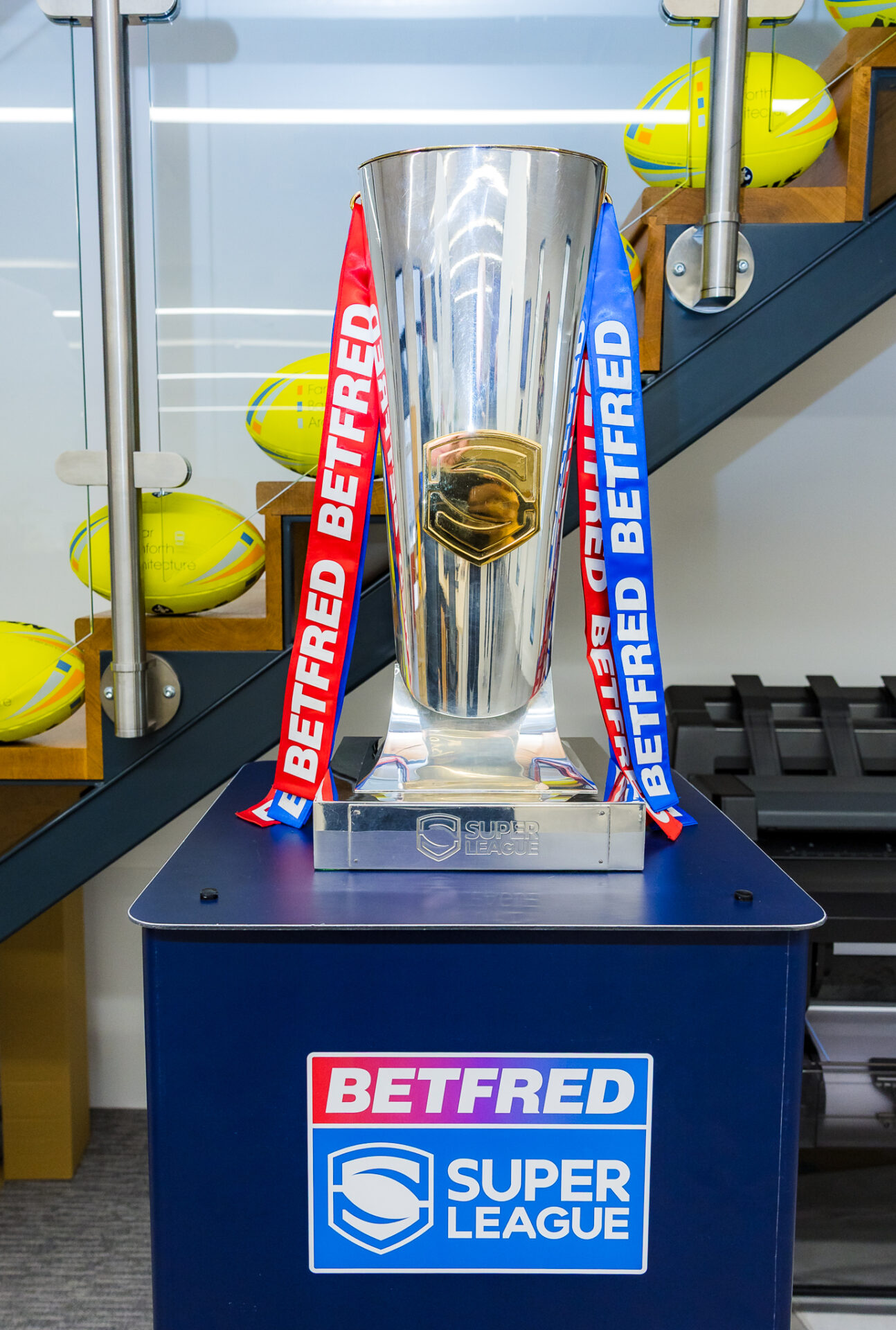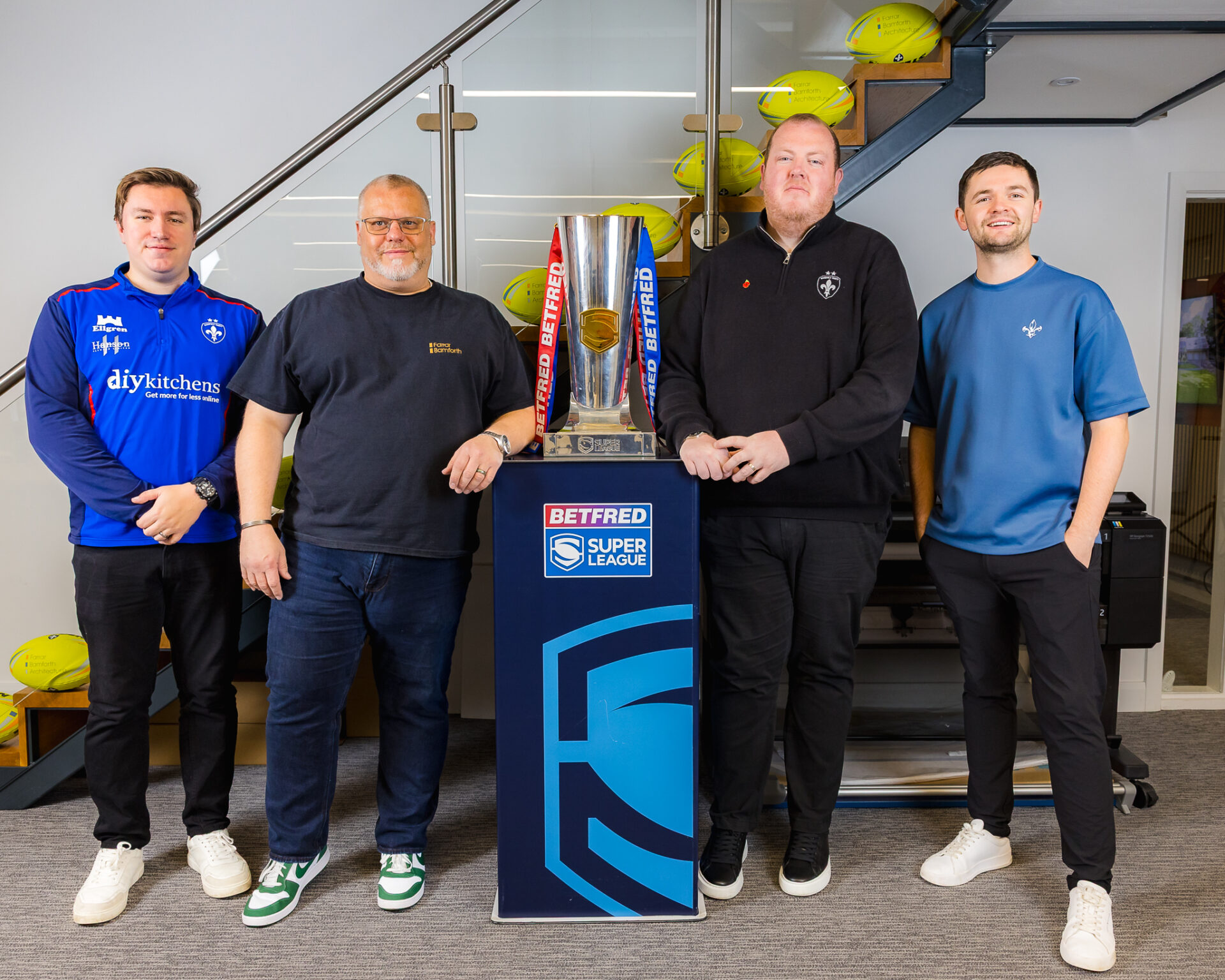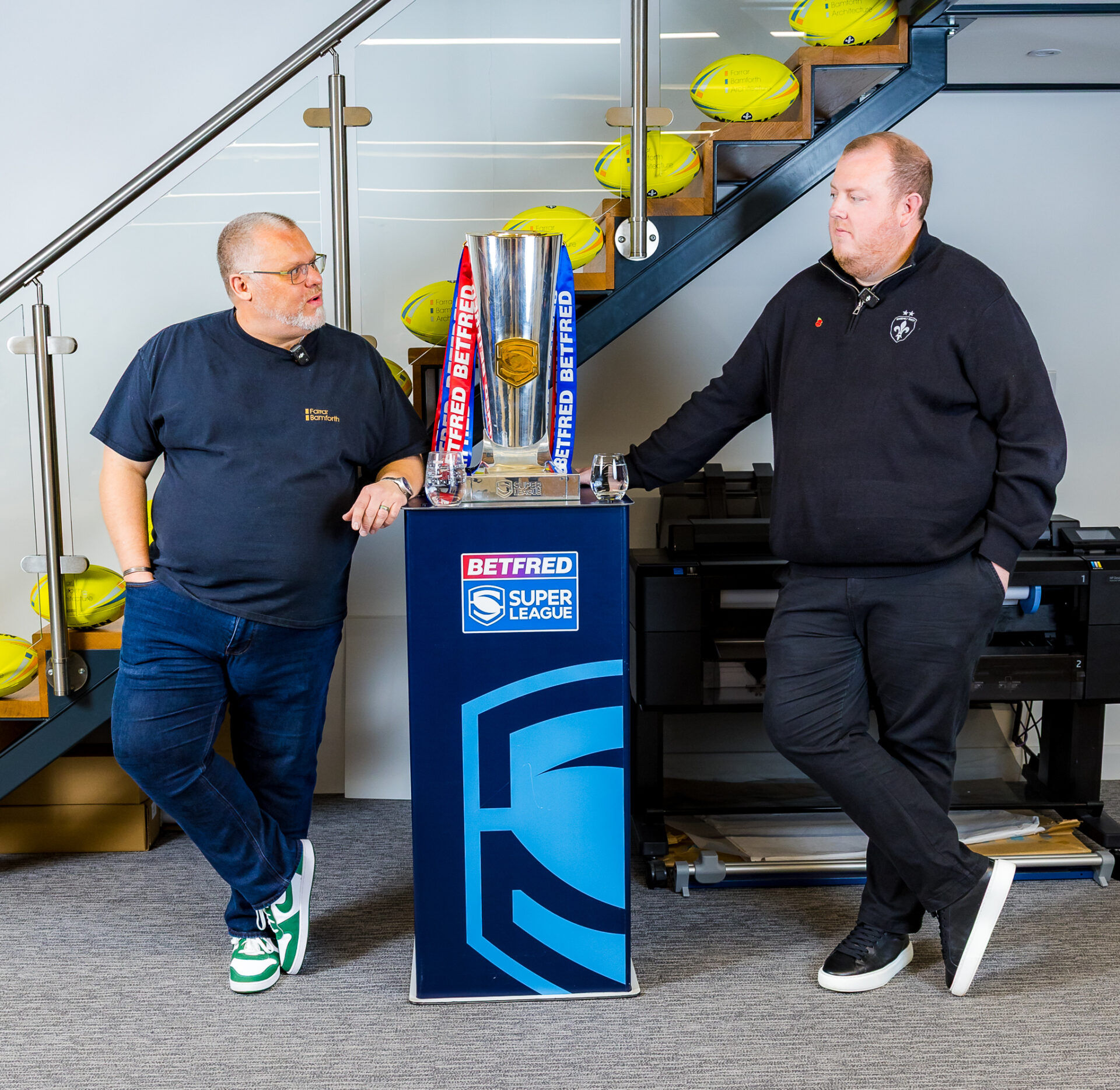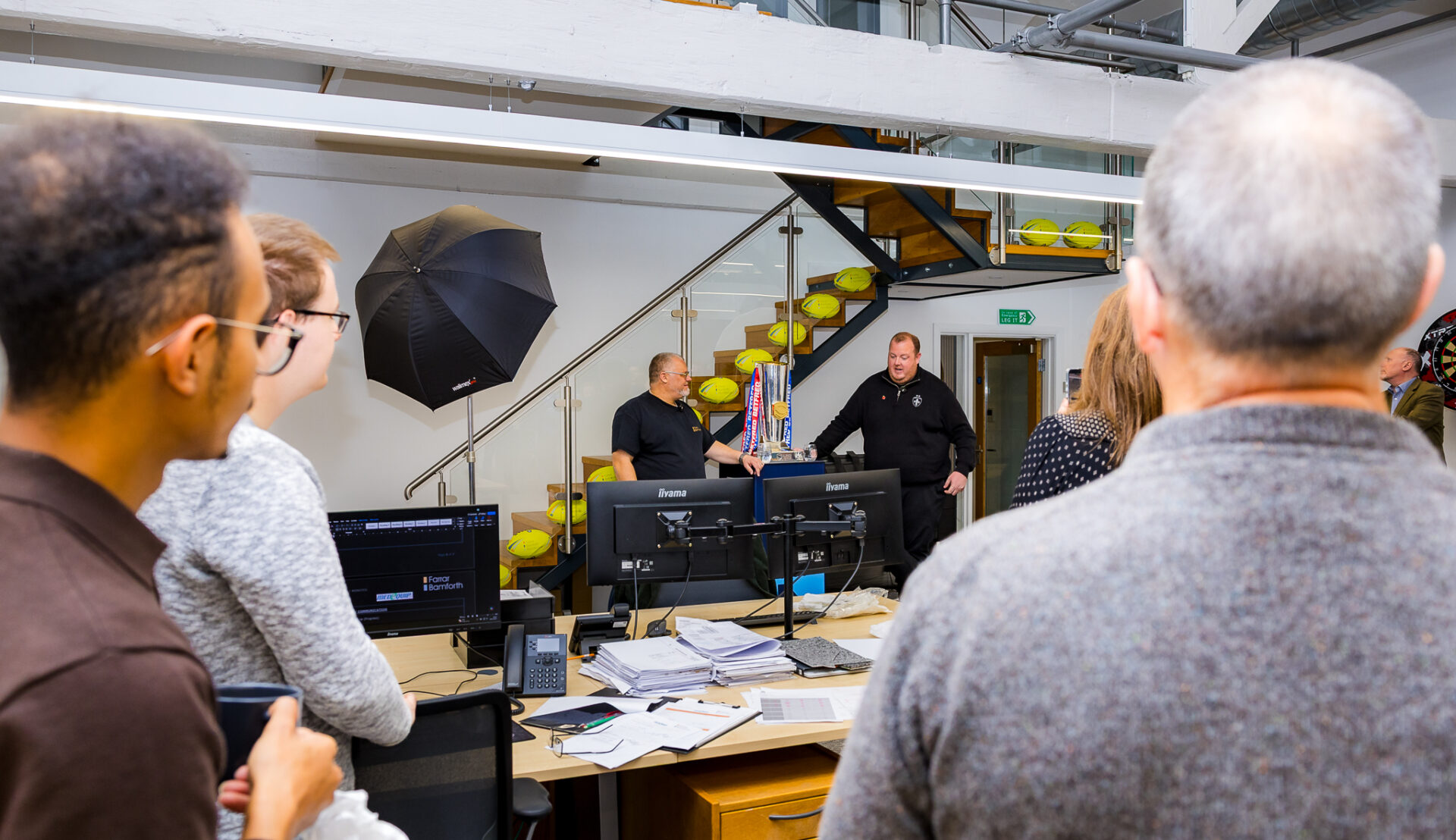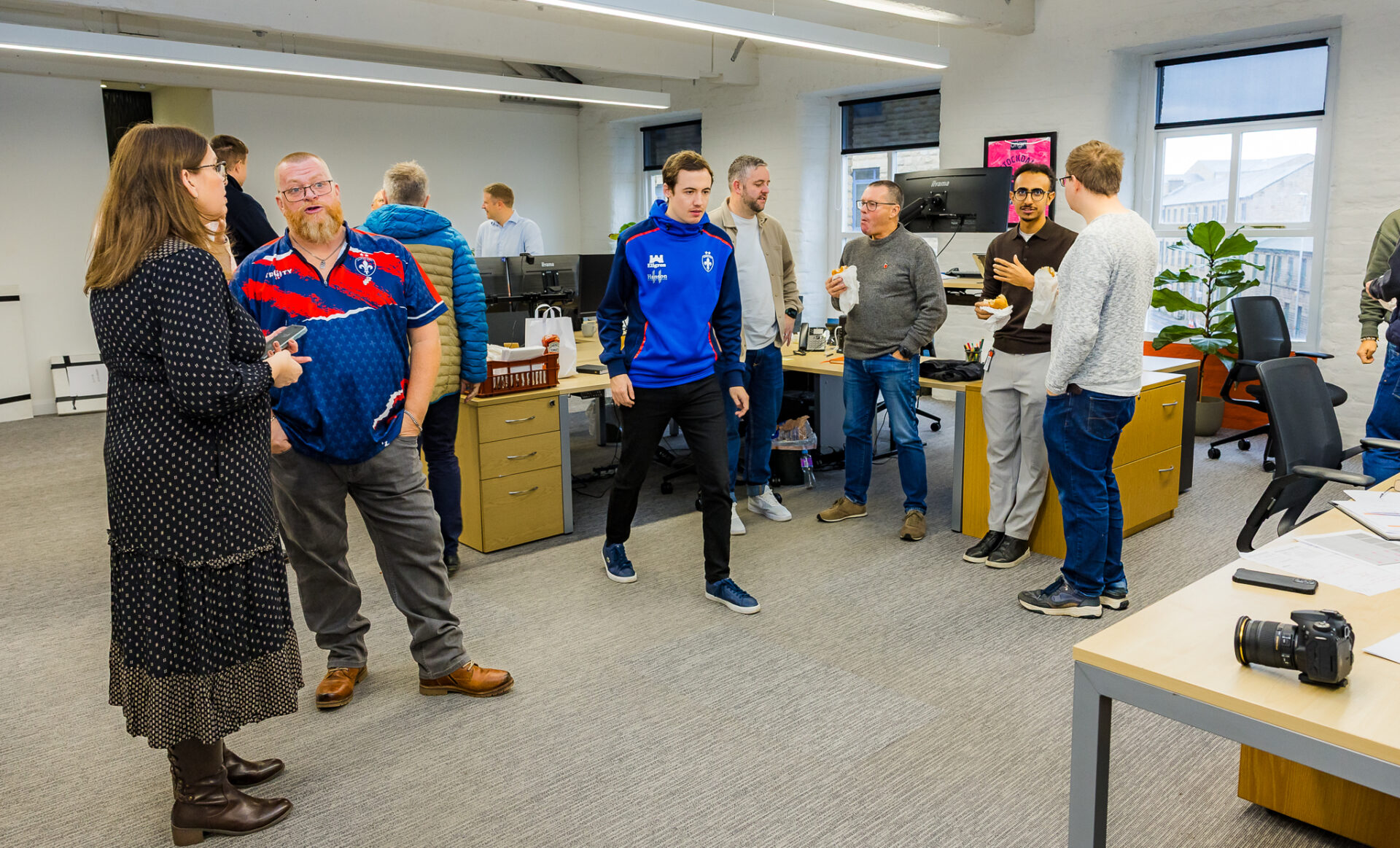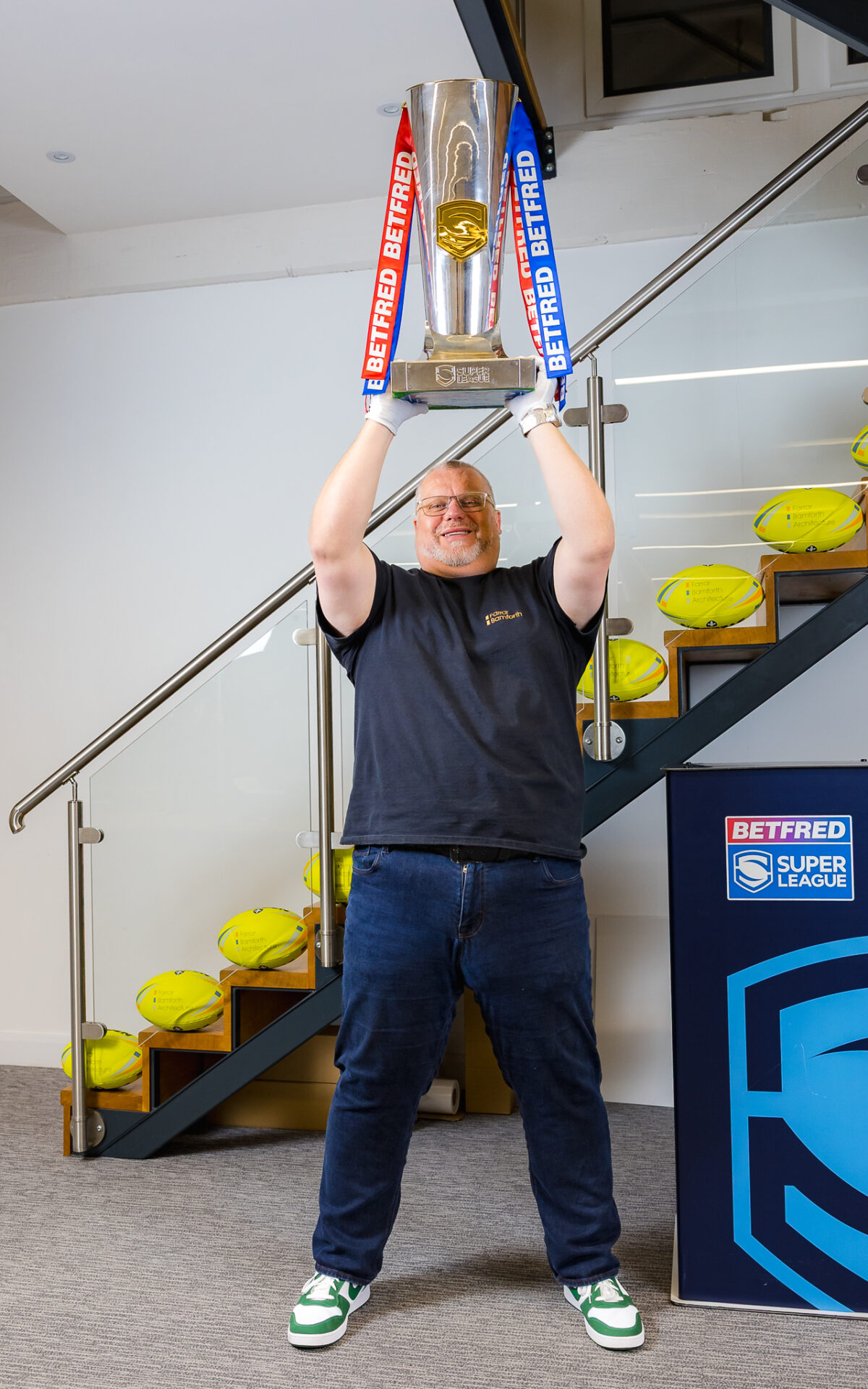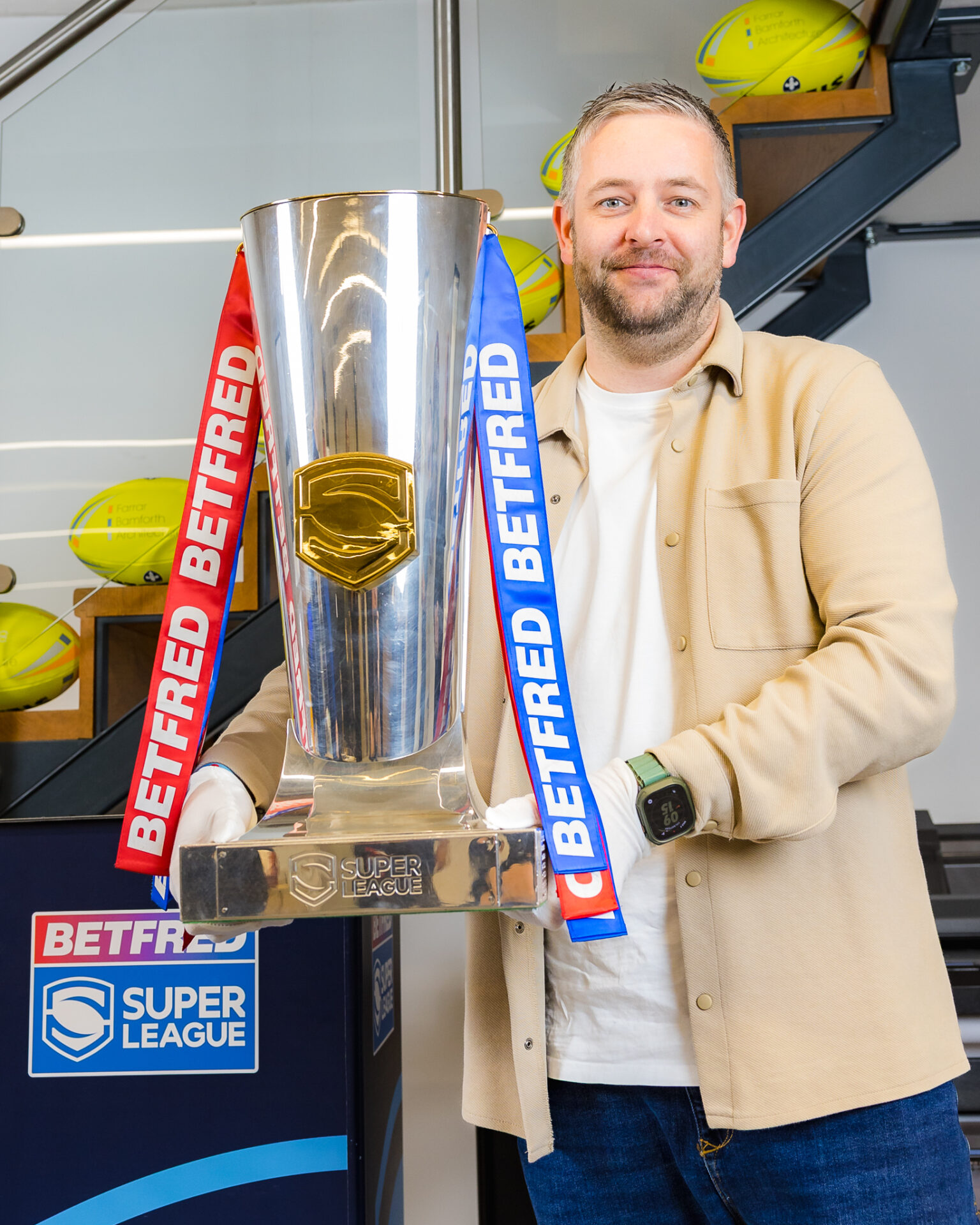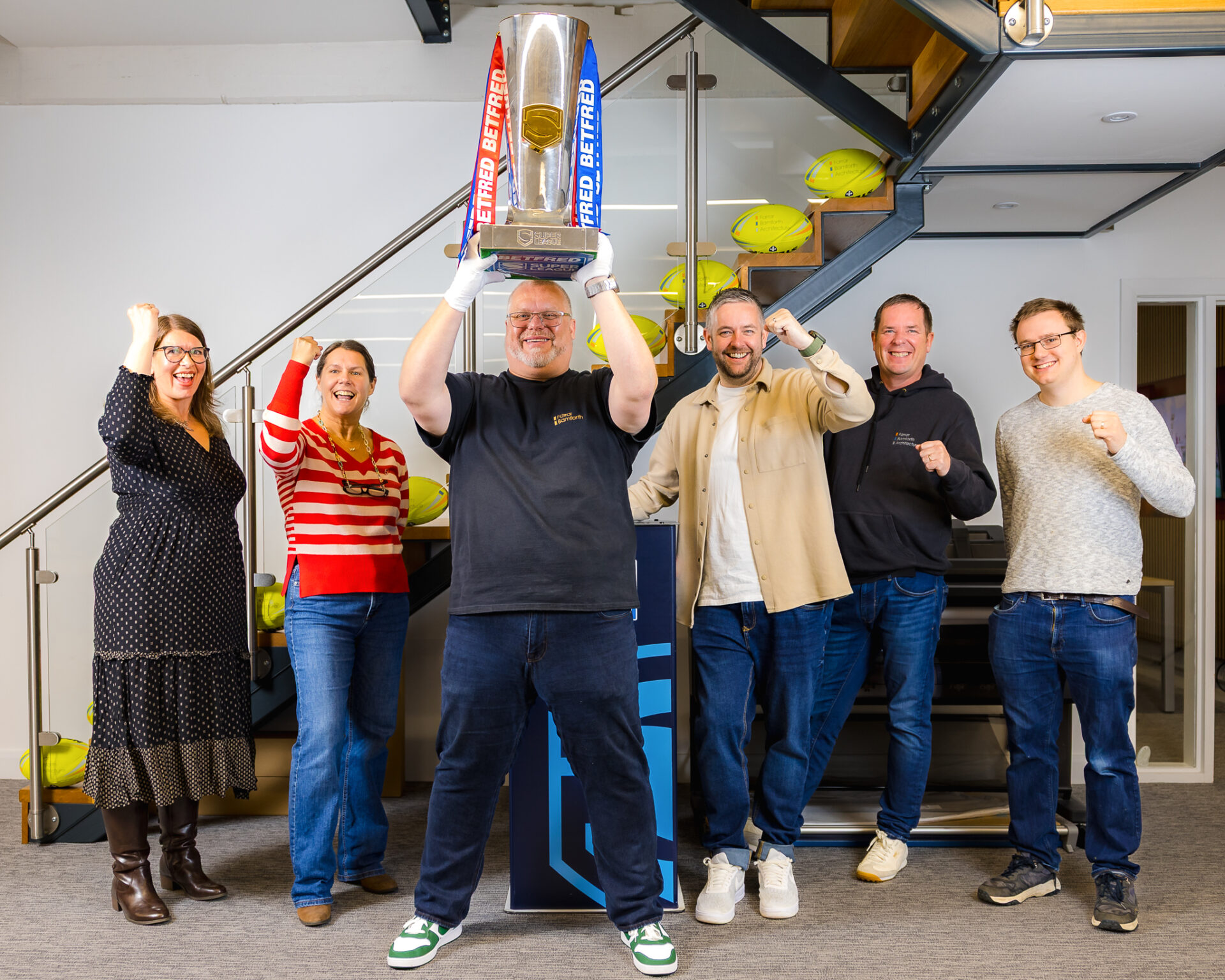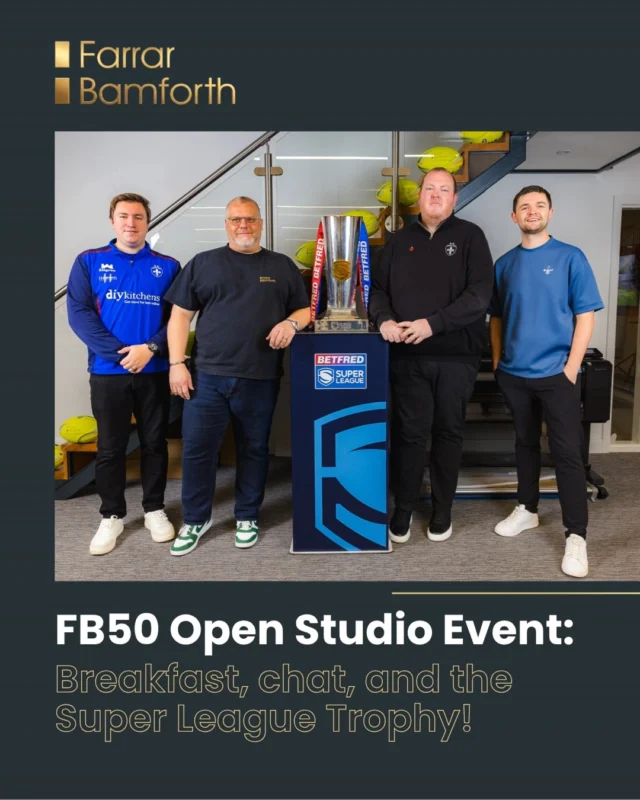
On Wednesday 4th November, we held an event to celebrate two major milestones – our own 50th anniversary in business and Wakefield Trinity (whose Community Foundation we sponsor) winning the rugby league Super League. Representatives from the Club brought the Super League trophy into our studio in Bates Mill in Huddersfield where we invited clients, colleagues, partners, and friends for a celebration event.
However, it was much more than that.
It certainly was a celebration; photos were taken with the trophy, bacon butties were eaten, and people got to catch up and network. However, many came away with a few things: real examples of team culture and how personality fit is as important as technical ability, the power of inclusion, and how these things are more than the fluffy nice things to do; they help to deliver actual results.
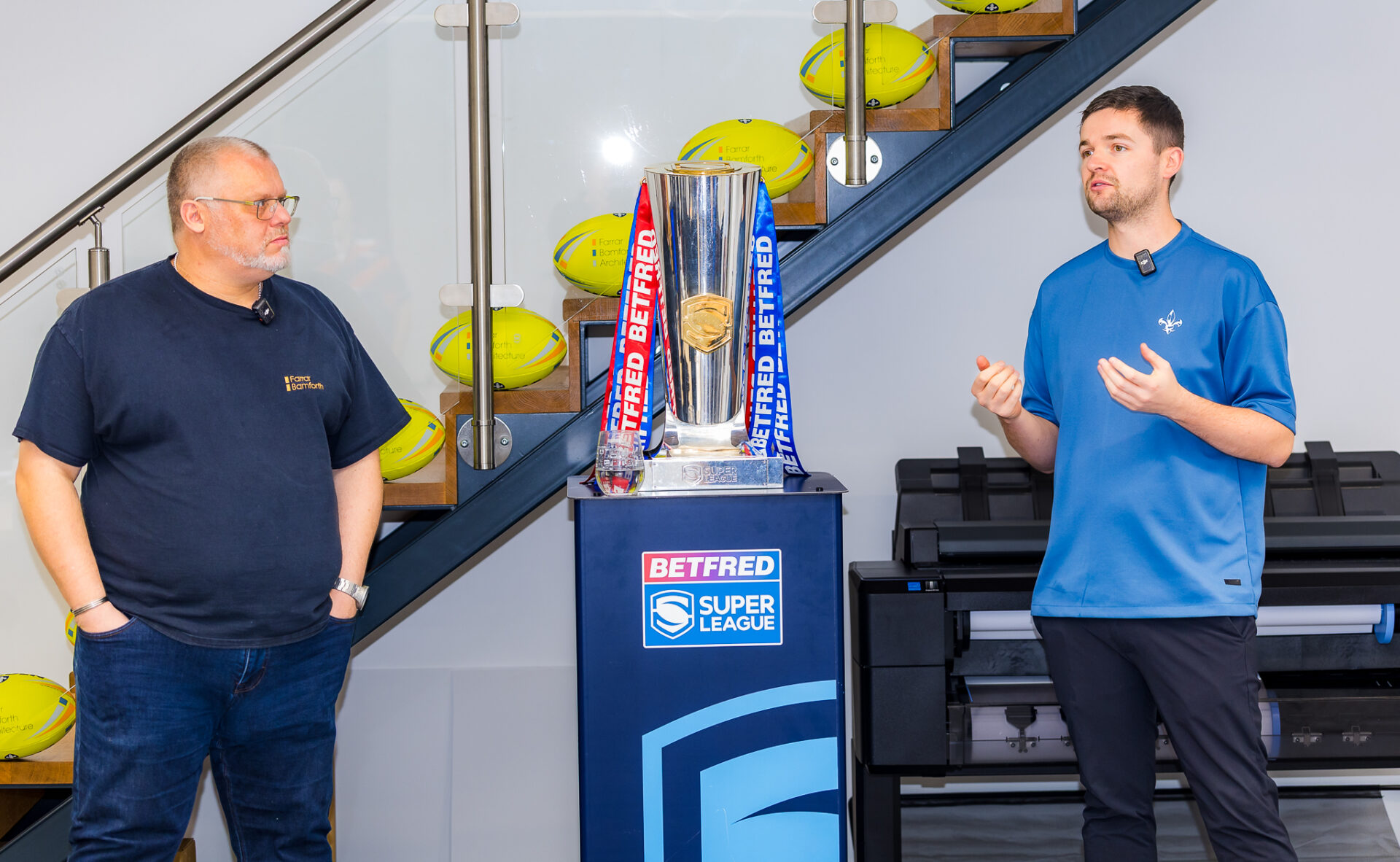
The trophy was accompanied to the studio by representatives from the Club, including director of rugby, Ste Mills, and CEO of WTCF, Luke Shale. Each offered fascinating insights into what they do and how that delivers real value to the club and there were plenty of parallels in business.
Ste spoke about the data driven approach to recruitment, with stats collected on every Super League player, every Championship player, and two levels of the NRL. Originally collated on an Excel spreadsheet, the system has now been enhanced by AI. This huge body of information is the starting point for recruitment for players but it’s far from the whole story. Ste talked about the importance of personality and finding people who are the right fit for the team. In business-speak terms, it’s about nurturing the culture of the organisation. In Ste’s own words it’s sticking firmly to a ‘no d**ckheads policy’! Both Ste and Tony Bowling, our MD, talked about bringing in people that are aligned with the values of the organisation. If someone has the experience, skills, and expertise to do the job but doesn’t fit with the culture of the team, it won’t work. We have our own term for this, a ‘no social hand grenades policy’!
Most importantly, this doesn’t just lead to a nicer place to work, Ste was very clear that it has directly contributed to the Club’s success and its victory in the Super League.
In a room of business people, it provided a fascinating insight that all were able to relate to in their own organisations.
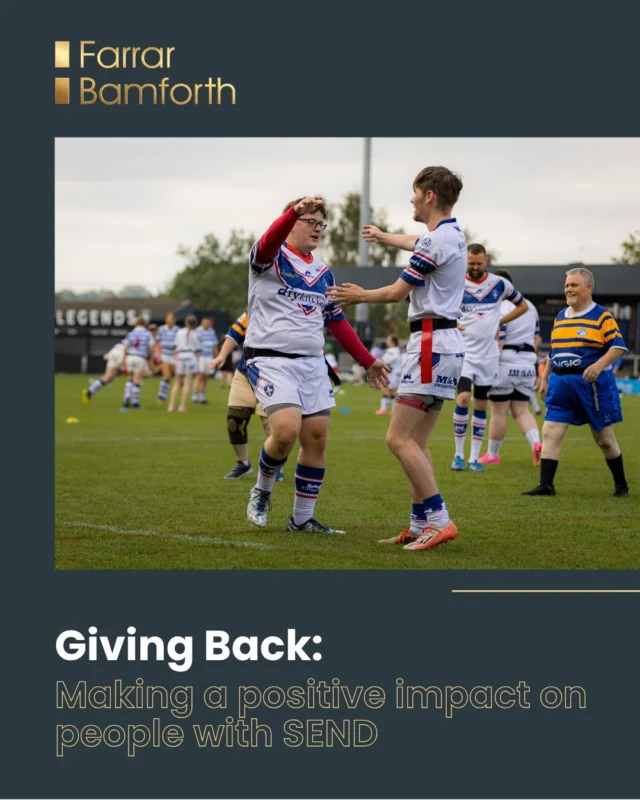
Both Ste and Luke also talked about the ‘One Club’ ethos they have at Trinity where players from across the club, including the men’s team, women’s team, wheelchair, physical disability, and learning disability, all mix together with no hierarchy, creating an inclusive community. Again, something that all organisations can advantage from.